How to Keep Worm Bedding Moist—Not Soggy—in a Small Apartment Bin
Worm bedding moisture is where most apartment composting problems begin. People either keep the bin too dry because they’re scared of smells, or they baby it with too much water and end up with a soggy worm bin. Neither works. What you want is bedding that feels like a wrung-out sponge: clearly damp, cool to the touch, but not dripping. If you grab a handful and squeeze, you should get maybe a drop or two at most. If water runs out, it’s too wet. If it feels dusty or the paper stays stiff and scratchy, it’s too dry.
That target matters even more in a small apartment bin because the system has less room to buffer your mistakes. A big outdoor pile can absorb a lot. A compact indoor worm care setup can go sideways fast. Too much moisture pushes out air, and worms need oxygen as much as they need food. Bedding that stays soaked also invites odors, clumping, fruit flies, and that swampy sludge nobody wants under the sink. Aim for damp and springy, not glossy and compacted. Once you know what “right” feels like in your hand, managing the bin gets much easier.
Read the Bin Like a Human: Easy Signs It’s Too Wet or Too Dry
You do not need a moisture meter to figure this out. The bin tells you everything if you pay attention. A soggy worm bin usually looks dense, shiny, and compressed. Food scraps turn into a heavy paste instead of blending into the bedding. The lid may collect condensation. The corners look muddy. The bin smells more like a wet basement than earthy compost. Worms may hang out on the walls or lid because the bedding below has gone low on oxygen.
On the dry side, the clues are different. Bedding looks pale, papery, and loose, almost like hamster bedding that never got used. Food scraps shrivel before the worms can really work on them. Worms may cluster deep in the lower layers where the moisture is hiding. Castings production slows down. Here’s the thing: in apartment composting, the top layer can look dry while the bottom is actually waterlogged. Don’t judge from the surface alone. Lift and fluff a middle section with your fingers. If the center feels balanced and the smell is mild and earthy, you’re in good shape. If the middle is dense and sticky, or bone-dry and lifeless, adjust there—not just on top.
Build Bedding That Holds Moisture Without Turning Into Sludge
The best fix for moisture problems is not usually “add water” or “leave the lid open.” It’s better bedding. Good bedding holds moisture evenly while still leaving pockets of air. My favorite mix for indoor worm care is mostly shredded cardboard, some torn paper, and a smaller amount of coco coir or finished compost. Cardboard gives structure. Paper softens the mix. Coir holds moisture well, but too much can make the bin feel dense, especially in a small container. If your bin tends to run wet, lean harder on cardboard than coir.
Also, chop your bedding smaller than you think you need to. In a small apartment bin, large sheets mat together and create soggy zones. Smaller pieces mix better with food and castings, so moisture spreads instead of pooling. Before adding bedding, dampen it evenly, then squeeze out the excess by hand. Don’t toss in dry cardboard and expect the bin to sort itself out later. That usually creates one wet layer and one dry layer. A balanced bedding mix acts like a sponge and a scaffold at the same time, which is exactly what keeps the worms comfortable and the bin breathable.
Feed in a Way That Doesn’t Drown the Bin
A lot of excess moisture in worm bins does not come from added water. It comes from food. Cucumbers, melon rinds, lettuce, tomatoes, and squash dump a surprising amount of liquid into a small system. If you feed those heavily, especially in one spot, you can create a soggy worm bin even if you never pour in a drop. The simple fix is portion control. Feed less at a time, bury it in different zones, and always cover fresh scraps with dry-ish bedding. That top cover matters more than people think. It absorbs steam and surface moisture before it turns into condensation and funk.
Freezing and thawing scraps can help worms break food down faster, but it also releases more water. So if you use frozen scraps, balance that with extra cardboard. Same goes for coffee grounds. They’re fine in moderation, but they compact when they stay wet. In apartment composting, small corrections beat dramatic ones. Instead of waiting until the bin is a mess, feed a modest amount, check it two or three days later, and adjust. If the last feeding is still looking sloppy and wet, don’t add more food yet. Add bedding, fluff the area lightly, and let the worms catch up.
Use Airflow and Bin Setup to Keep Moisture Even
Bin design changes moisture behavior more than most beginners realize. A small plastic tote with a tight lid traps humidity fast, which is why indoor worm care often swings wet. You do not need to turn the bin into a colander, but you do need enough airflow for moisture to leave gradually. Vent holes near the upper sides help. A dry cardboard sheet or a thick layer of shredded paper under the lid helps too, because it catches moisture and can be swapped out easily.
What you want to avoid is compaction. If the bedding settles into a heavy mass, even a well-ventilated bin can stay soggy in the middle. Every week or so, gently lift and loosen a few sections with your fingers. Not a full stir. Worm bins are not salad. Just enough to keep channels open. If your bin has a drainage tray, don’t rely on it as the main solution. Leachate at the bottom usually means the upper bedding is already too wet. Better to prevent the excess in the first place with airy bedding, modest feeding, and a breathable cover layer. In a dry apartment, you may need the lid more closed; in a humid apartment, you may need it slightly more open. The bin lives in your actual room, so adjust to that reality.
How to Fix a Soggy Bin Fast Without Stressing the Worms
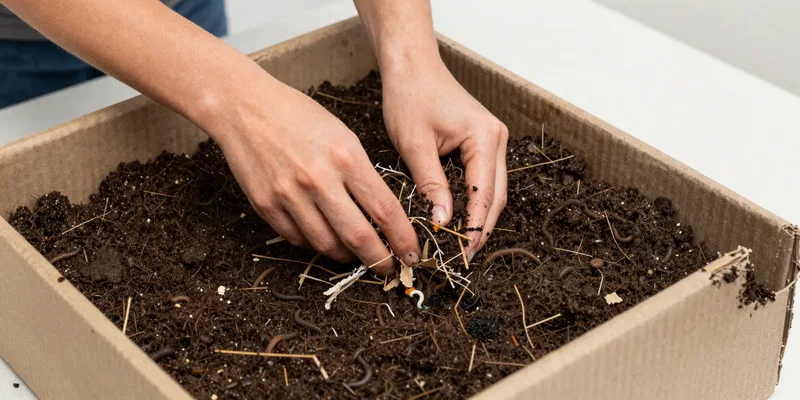
If your bin is already too wet, don’t panic and don’t dump it out unless it’s truly gone anaerobic and foul. Most of the time, the fix is straightforward. Stop feeding for a few days. Add a generous amount of dry shredded cardboard or torn brown paper, especially into the wettest zones. Mix gently enough to open the texture, but not so aggressively that you shred the worms’ habitat. Then leave the lid slightly ajar for a short period, or swap in a dry absorbent layer under the lid to pull moisture upward.
If the smell is strong, remove any large rotting chunks of food that are obviously overpowering the system. If the bedding has become mud at the bottom, lift worms and decent material from the top and rebuild the bin with fresh damp bedding around them. The opposite problem is easier: if the bin is too dry, mist the bedding lightly or add pre-moistened bedding, not a big pour of water. Slow corrections work best. Worms handle a lot, but they prefer stability. Once the bedding feels springy again and the smell turns back to earthy and mild, you’re back in business.